


quand partir à La Réunion ?
Are you planning a trip to Reunion Island and wondering when to go to enjoy the sun, beaches and landscapes of the island? The choice of dates depends on your desires: holidays by the lagoon, hikes in the mountains, discovering waterfalls or exploring the west coast.
Thanks to its tropical climate, Reunion Island can be visited all year round. However, temperatures, rainfall and weather conditions vary according to the seasons and regions.
Located in La Saline-les-Bains, on the west coast, Le Chant du Lagon is a starting point for enjoying the coastline and organizing your discoveries of the island.
What is the best time to go to Reunion Island?
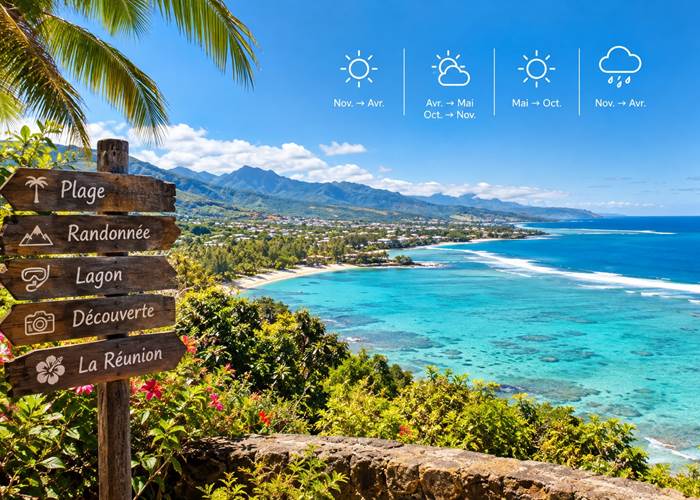
Reunion Island experiences two main seasons, the reverse of those in mainland France: the austral summer, hot and humid, from November to April, and the austral winter, cooler and generally drier, from May to October. Conditions vary, however, depending on the year and the area of the island. Source: Reunion Island Tourism.
For many travelers, the transitional periods, particularly April-May and October-November, are ideal for combining days at the beach with excursions. However, there is no perfect time for every activity.
From May to October: the southern winter
The southern winter is generally a drier and cooler period. Along the coast, temperatures remain pleasant enough to enjoy the beaches, take walks, and explore the west coast.
This is an interesting time if you wish to:
- Explore the island and its diverse landscapes.
- Organize mountain hikes.
- Enjoy the beaches and the lagoon.
- Travel during a generally less humid period.
However, pack warm clothes if you plan to go up into the mountains: temperatures can be significantly lower in the highlands than on the coast.
From November to April: the southern summer
The southern summer is hotter and more humid. Temperatures may exceed 30°C on the coasts, and heavy downpours are possible, particularly in some areas.
This season also allows you to enjoy lush vegetation, waterfalls fed by rain and pleasant temperatures for seaside activities when conditions are favorable.
This is also the period when the risk of cyclones is highest. It is therefore recommended to follow weather forecasts and official instructions before and during your trip.
April-May and October-November: the transition periods
The shoulder seasons can offer a good compromise between warmth, humidity, and visiting conditions. However, they remain variable: the rains can start earlier or last longer depending on the year.
If you are looking for a holiday combining beach time, exploring the island and excursions, these months are worth considering based on prices, availability and forecasts.
For more precise climate information, consult the data from Météo-France La Réunion .
What is the temperature like in Reunion Island?
Temperatures depend in particular on altitude and exposure to wind.
On the coast, the heat is present for much of the year. In the highlands, temperatures can be much cooler, particularly at night and during the southern winter.
The water temperature also varies throughout the year. The lagoon waters are generally pleasant for enjoying the seaside, but swimming conditions also depend on the weather, the swell, and designated swimming areas.
If you are planning any mountain excursions, remember to pack several layers of clothing, even if you are staying by the sea.
Can we enjoy the La Saline-les-Bains lagoon all year round?
The Trou d'Eau lagoon and the La Saline-les-Bains area are prized for their turquoise waters and tropical setting. The west coast is generally drier than the east coast, making it an attractive region for beach holidays.
You can plan for:
- Days at the beach.
- Snorkeling in authorized areas and when conditions permit.
- Walks along the coast.
- Outings to neighboring towns.
- Excursions to other landscapes of Reunion Island.
Even during the dry season, the weather can change rapidly, especially in the mountains. Before swimming or engaging in any water sports, check local information and follow safety guidelines.
To help you plan your outings, check out our guide: What to do around the Trou d'Eau lagoon?
When is the best time to go hiking in Reunion Island?
If hiking is your priority, the generally drier period from May to October can be ideal. However, mountain trails remain subject to weather conditions: rain, fog, wind, and trail conditions can all affect your plans.
To enjoy the views, leave early when possible and check trail information before you set off.
If you wish to alternate hiking and relaxing days, staying on the west coast allows you to organize a varied program, subject to travel times.
What time of year should I choose for a family holiday?
For family holidays, choose dates that fit your budget, the availability of your accommodation and the activities you want to do.
The generally drier months can make it easier to plan excursions and days at the beach. During warmer and more humid periods, maintain some flexibility in your schedule so you can adapt outings to the weather.
In all cases, plan for sun protection, water, appropriate clothing and alternative activities for rainy days.
Should we avoid cyclone season in Reunion Island?
The cyclone season in the southwestern Indian Ocean basin mainly affects the warmer months, with activity generally more pronounced in the middle of the southern summer.
This does not mean that a cyclone will necessarily hit the island during your stay. However, a weather event may bring heavy rain, strong winds, traffic restrictions, or the temporary closure of certain sites.
Before departure, check the cancellation policies of your services and travel insurance. During your stay, follow the instructions of the authorities and the weather forecasts from Météo-France.
Official information: Météo-France — cyclones and cyclonic activity .
Where to stay to enjoy Reunion Island at the right time of year?
Whatever the season chosen, La Saline-les-Bains is an interesting destination to discover the west coast and enjoy the lagoon when conditions permit.
Le Chant du Lagon offers vacation rentals near Trou d'Eau beach. You can organize your days between relaxing by the sea, culinary discoveries and excursions to other regions of the island.
Discover our holiday rentals in La Saline-les-Bains to choose the accommodation that suits your dates and desires.
Have you chosen your dates?
Check availability and plan your stay at Chant du Lagon:
Book your holiday rental .
FAQ: When to go to Reunion Island?
What is the best month to go to Reunion Island?
There is no universally best month. May to October generally corresponds to the drier season, while April-May and October-November can offer a good compromise. The choice depends on the activities you're looking for and the weather conditions at that time of year.
What is the rainy season in Reunion Island?
The wettest period is generally during the southern summer, from November to April. Météo-France places the rainy season between January and March, while also noting that the transition months can be rainy as well.
Is it possible to swim in Reunion Island during the southern winter?
Yes, the coastline maintains pleasant temperatures and swimming may be possible in designated areas when conditions are favorable. Always respect the signs and local guidelines.
Is the west coast drier than the east coast?
Generally, yes. The island's topography creates strong climatic differences: the east coast receives more rainfall, while the west coast is generally drier.
When to book your accommodation in Reunion Island?
It's wise to book well in advance if your dates are fixed, especially during school holidays and peak periods. Compare availability and cancellation policies before confirming your stay.